
- Accessing biologic medication
- Criteria/ Eligibility for biologic medication
- Subjective versus Objective criteria
- Staying on a biologic medication long term
I recently gave a talk to some 3rd year Biomedical Science students for their Drug Discovery module at Imperial College London about my experience of living with severe asthma and the various medications I have been on for it. I also had a conversation with the Co-Convener of the Lung Health Cross Party Group at the Scottish Parliament ahead of her debate on Severe Asthma. During both of these talks/ conversation the topic of biologics came up which promoted me to reflect on my experience of accessing biologics and staying on them.
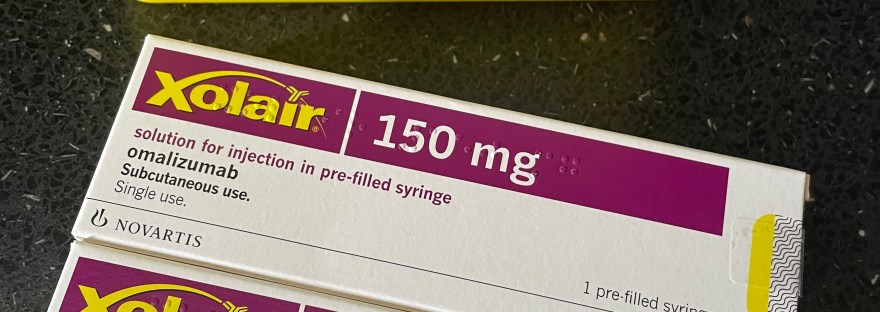
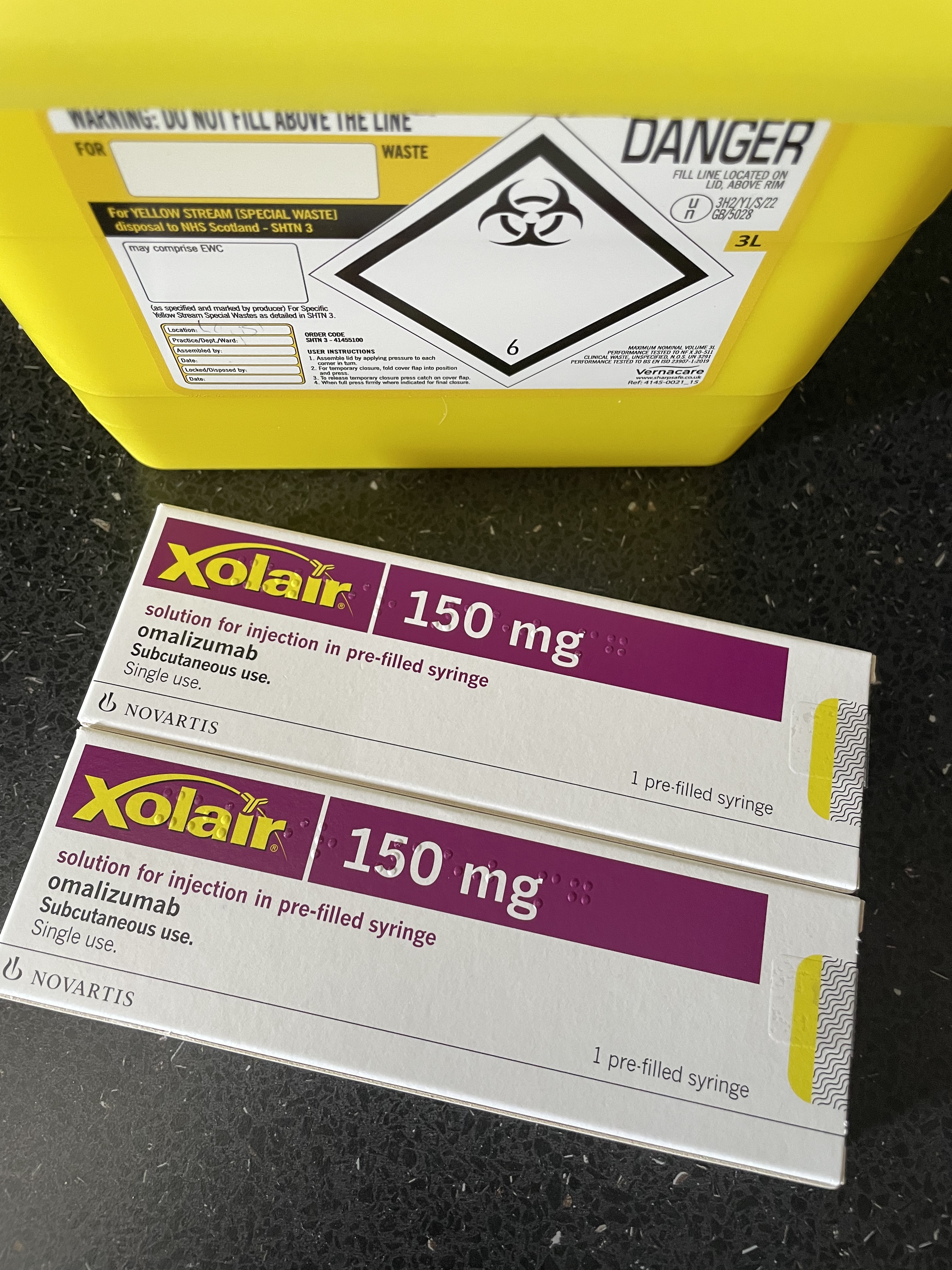
I am currently on a biologic called Omalizumab (Xolair) and have been on this for 2 years now. I was on Mepolizumab (Nucala) in the past but this was stopped after a year as I developed some issues with my eye.
A biologic medication which can sometimes be referred to as a mab or mabs, is a drug that targets a specific part of your immune system to treat disease. Due to how specialised biologics are they are expensive and you need to hit strict criteria to be considered eligible for a trial on them and then hit further criteria to enable you to stay on them after your trial period is up. This criteria is preset by the pharma company and then sometimes tighter eligibility criteria are introduced by NICE (UK) or SMC (Scotland) which the patient also has to meet. As a result of this people in the UK (I only have UK experience so cannot speak for other countries but I imagine they are similar) can find it difficult to access biologic treatment.
In Scotland I have actually found it very easy to access biologic medication due to being under a severe asthma specialist so when he thought Nucala might be good for me I was able to start it pretty quickly and we just had to make an appointment for me with the asthma nurse specialists whereas in England you need to have your case presented to an MDT (multi disciplinary team) meeting where you are discussed and a decision is made as to wether or not to fund a biologic for you. To get presented at an MDT for a biologic for severe asthma you need to be under the care of a tertiary centre which specialises in severe asthma rather than a secondary care respiratory clinic. Many people do not get referred into tertiary care very quickly and they have long wait lists so often their health will get worse due to side effects of medication needed which may not have happened if referrals happen quickly.
One of the things I struggle with understanding when it comes to biologic medication is how the eligibility criteria is set. I have both severe asthma and spontaneous idiopathic urticaria and angioedema (I will refer to it as urticaria from now) which require a complex medication regime to manage and keep me well. As I wrote earlier I am on omalizumab also known by its brand name Xolair but what many people don’t realise is that I am on it for my urticaria not my severe asthma. I do not hit the right criteria to make me eligible for Xolair for severe asthma yet I do for urticaria. I have never been eligible for Xolair for severe asthma because it is based on a blood marker called IgE. My IgE does not fall in the right range to get it.
This is where I get puzzled because the criteria for Xolair for severe asthma is based on objective data as it is based on an exact number or range that your blood serum IgE needs to be however to be considered for Xolair for urticaria it was very much based on subjective data. I had to fill in a diary called the Urticaria Activity Score 7 (UAS7) where I would record the number of hives I had in that day and then also record the severity of the itch too. At the end of each week I would total the scores from each day. Based on this subjective data my consultant decided I would start Xolair. It was very much based on my perspectives of the urticaria rather than an exact number present in my blood like you need for severe asthma. Don’t get me wrong I am very very grateful that for the urticaria I was able to be put on Xolair because its effects have been life changing not only for my urticaria but also my asthma too. I doubt I would have had the positive effects and better control of my asthma if it were not for being on Xolair however I would never have got the chance to try Xolair and get the positive effects if I did not have urticaria.
This is where the patient voice is so essential because now the amount of money I am saving the health service is huge because my asthma is better controlled and I have not been needing the same level of care that I was previously. Before I felt like I was living in the hospital due to my severe asthma but now it has reduced dramatically. It is essential for the pharma companies to know what the patient experience is so during the drug discovery phase they can keep in mind who might be suitable for a drug and not just focus on what the objective eligibility criteria should be but what the patient need is. There are many people out there who could like me benefit from a biologic but they are not able to get it because of the strict criteria that has been set out. I understand why they have the strict criteria due to the cost of the drug but it is frustrating especially due to how long I had such severe and uncontrolled asthma all while Xolair was on the market. I ask myself could I have potentially had a far better quality of life, not have my career halted and still have been able to play abled bodied sports had I been able to get Xolair.
The struggle is not over once you are eligible for a biologic and get put on it. Often you are only put on a trial of it for a certain period of time and once again you have markers that you need to hit to show that you have had a positive response to the biologic. What many patients find is that they get taken off the biologic once their trial period (often a year) is over because they have not hit the preset criteria which deems them to have had a response to the treatment. There is a big disconnect between what is deemed a response to a biologic treatment from a pharma and funding view point compared to what the patient feels is a positive response. Often patients will find that even though their lung function may not have improved massively or they have still had hospital admissions they feel their quality of life has improved however this improvement is not deemed a response. While I was on Nucala I found that day to day I was more stable and even though I was still having really severe asthma attacks that needed ICU intervention the in-between times was so much better and I was able to plan things and not need to cancel stuff. I felt like I had a bit of life back compared to before when it was a constant rollercoaster and never knowing what the next day, hour or minute would hold but on the Nucala I had stability. Where as my response to xolair for my urticaria is once again based on how I find my urticaria and the associated itch. It was very much based on me and how my life is impacted. I have been having a really good response to the Xolair so my consultant who looks after my urticaria suggested I extend the period between my injections to see how my symptoms were. I found my symptoms flared up a lot when I extended the period between injections so I reduced it back down to what I was doing before. This would never be possible if I was on it for my severe asthma but it was good try and see how my urticaria responded.
I wish that there could be a patient perspective into response to treatment and not just criteria that has been preset. This is one of the things I tried to stress when speaking to the Biomedical Science students was for them to think about the end goal for the patient and the patients life rather than objective data all the time.
The biologic world is so complex and as a patient navigating it with multiple conditions which can be treated with a biologic it frustrates me, inspires me, baffles me and makes me grateful, all at the same time. I just hope that in future during the drug discovery phase and early trials that the patient group who the biologic is for are involved so that the criteria to make you eligible and the criteria for response are meaningful to the patient and they will not find themselves getting taken off a drug that they felt was improving their quality of life.

 ANONYMOUS-ASTHMA